Each plenary runs 45 minutes with 20 minutes of questions, chaired by the relevant track chair. All four are recorded and released to registered delegates within a week.

Opening plenary · Wednesday 10:00
Prof. Amara Okonjo-Reid
Professor of Social Policy, London School of Economics
Measuring what we owe each other: distributive attitudes after a decade of crisis
Drawing on fifteen waves of the European Social Survey and her own panel of 9,400 British households, Okonjo-Reid argues that solidarity has not collapsed so much as narrowed: support for redistribution remains high, but the circle of people it is imagined to cover has contracted. The lecture sets out what this means for the design of universal programmes.

Plenary two · Thursday 09:15
Prof. Hendrik Vasquez
Chair of Political Sociology, University of Amsterdam
Thin trust: how local institutions hold when national ones do not
Vasquez presents comparative fieldwork from twelve mid-sized cities in six countries, showing that confidence in municipal services has diverged sharply from confidence in national government. He proposes a working account of the mechanisms — visibility, recourse and repetition — and asks whether they can be engineered upward.
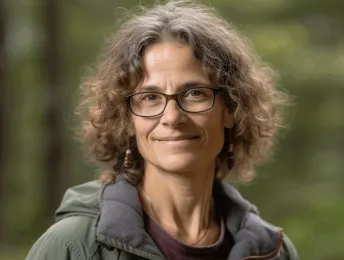
Plenary three · Thursday 16:30
Dr Leila Farouk
Senior Research Fellow in Migration Studies, University of Cape Town
Arrival cities: what receiving neighbourhoods actually do
Based on four years of ethnographic work in Johannesburg, Nairobi and Marseille, Farouk shifts the question from what states decide to what neighbourhoods absorb. She reads informal housing, credit and childcare arrangements as an unrecorded infrastructure of reception, and considers the cost of policies that ignore it.

Closing plenary · Friday 11:00
Prof. Junko Iwasaki
Professor of Computational Social Science, University of Tokyo
Big data, small claims: what platform traces can and cannot tell us
Iwasaki reviews a decade of digital-trace research and sets out three inference problems the field keeps rediscovering. Her argument is not against scale but for pairing it with designed measurement, illustrated by a survey-plus-trace study of 60,000 Japanese users.
Invited panel · Thursday 14:00
Ninety minutes on peer review under strain, open-access economics, and what early-career researchers should submit where. Audience questions from the floor and from the stream.
- Dr Priya Raghunathan — Editor-in-Chief, Journal of Comparative Social Policy
- Prof. Tomás Ferreira — Chair of Research Assessment Reform, University of Lisbon
- Marta Nowak — Head of Open Research, Cambridge University Press
- Dr Samuel Adeyemi — Postdoctoral Fellow, University of Ghana (early-career respondent)